Demos
Demos  Colors
 Docs
Docs  Support
Home 15
Newly Added



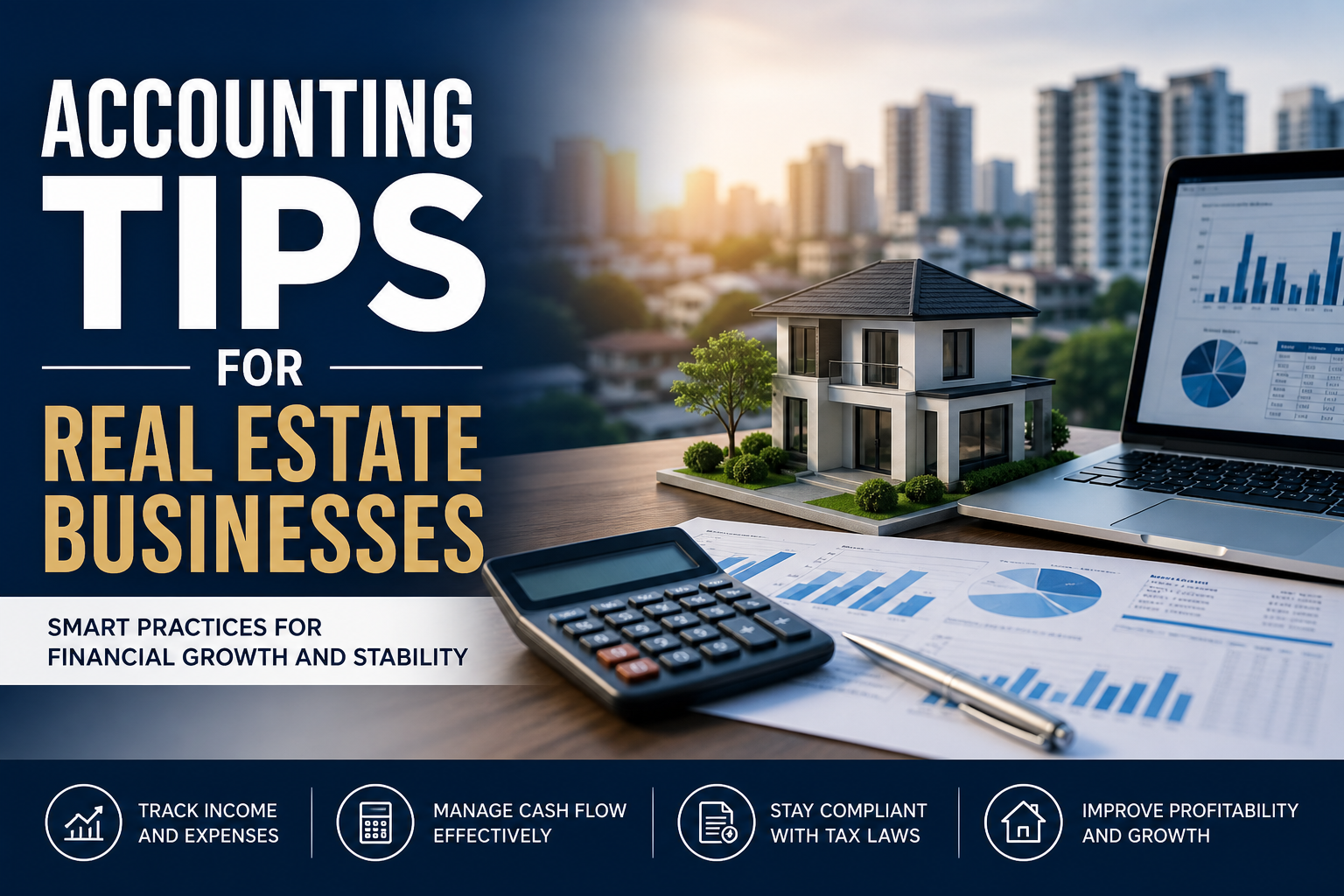
The real estate industry operates on complex financial structures, fluctuating cash flows, and long-term investments. Whether you are a property manager, real estate investor, developer, or broker, maintaining accurate financial records is essential for sustainable growth. Strong accounting practices not only keep your business compliant but also help you make informed decisions, improve profitability, and avoid costly mistakes.
LIT NEXUS understands the unique financial challenges faced by real estate businesses and the importance of maintaining clarity in every transaction. This guide outlines practical accounting tips that can help you streamline your finances and build a stronger foundation for your business.
Real estate accounting is different from traditional business accounting. It involves tracking multiple income streams such as rental income, commissions, and property sales, along with expenses like maintenance, property management, taxes, and financing costs. Each property often functions as an individual financial unit, requiring separate tracking and analysis.
A clear understanding of how money flows through your business allows you to evaluate performance at both the property level and the overall portfolio level. Without this clarity, it becomes difficult to identify profitable investments or areas that require improvement.
One of the most common mistakes in real estate businesses is mixing personal and business finances. This creates confusion, complicates tax filing, and increases the risk of errors. Opening dedicated business bank accounts and credit lines ensures that all transactions are recorded accurately.
Separating finances also provides a clearer picture of your business performance. It helps in tracking expenses, calculating profits, and maintaining transparency, which is especially important if you are working with partners or investors.
Consistency in bookkeeping is the backbone of effective accounting. Every transaction, whether it is rent received, repair costs, or loan payments, should be recorded promptly. Delayed or inconsistent entries often lead to discrepancies and financial mismanagement.
Using reliable accounting software can simplify this process by automating data entry, generating reports, and reducing manual errors. Accurate records not only help in daily operations but also make audits and tax filings much smoother.
Each property in your portfolio should be treated as a separate financial entity. Tracking income and expenses at the property level allows you to measure profitability more effectively. It helps you understand which properties are performing well and which ones may need strategic changes.
This level of detail is particularly important for investors who manage multiple properties. It enables better decision-making when it comes to selling, upgrading, or expanding investments.
Tax compliance is a critical aspect of real estate accounting. Regulations can vary depending on the location and type of property, making it important to stay informed about applicable tax laws. This includes property taxes, capital gains tax, rental income tax, and deductions related to depreciation and maintenance.
Proper tax planning can significantly reduce your financial burden. Missing deadlines or failing to comply with regulations can result in penalties that impact your overall profitability.
Cash flow management is crucial in real estate, where large expenses and irregular income are common. Even profitable businesses can face financial difficulties if cash flow is not managed properly. Regular monitoring ensures that you have enough liquidity to cover operational costs, loan repayments, and unexpected expenses.
Understanding your cash flow patterns also helps in planning future investments and avoiding financial strain during low-income periods.
Real estate is inherently a long-term investment. Effective accounting should include financial planning that aligns with your long-term goals. This involves budgeting for property improvements, forecasting returns, and evaluating financing options.
Strategic planning helps you make informed decisions about when to buy, sell, or hold properties. It also ensures that your business remains financially stable even during market fluctuations.
Managing real estate finances can become overwhelming as your portfolio grows. Professional accounting support can bring structure, accuracy, and efficiency to your financial processes. Experts understand industry-specific challenges and can provide valuable insights that go beyond basic bookkeeping.
Working with a reliable accounting partner like LIT NEXUS ensures that your financial records are maintained accurately, compliance requirements are met, and your business is positioned for growth.
Modern accounting tools have transformed the way real estate businesses manage their finances. From automated bookkeeping to real-time financial reporting, technology can significantly reduce manual work and improve accuracy.
Adopting the right tools allows you to focus more on strategic decisions rather than getting caught up in routine financial tasks. It also enhances transparency and makes collaboration with accountants more efficient.
Accounting is not just about maintaining records; it is about gaining control over your financial future. For real estate businesses, where investments are substantial and risks are high, strong accounting practices are essential for long-term success.
By maintaining accurate records, managing cash flow effectively, staying compliant with tax regulations, and leveraging professional expertise, you can build a financially sound real estate business. LIT NEXUS is committed to helping businesses achieve clarity, compliance, and confidence in their financial journey.
Running a business involves much more than generating sales and managing operations. Behind every successful…
How Modern Businesses Are Simplifying Financial Management In today’s fast-moving business environment, managing finances efficiently…
The rise of freelancing and self employment in India has transformed how people earn and…
Running a business in today’s fast paced environment means juggling multiple responsibilities at once. From…

Error: Contact form not found.

The great explorer of the truth, the master-builder of human happiness no one rejects dislikes avoids pleasure itself because it is pleasure but because know who do not those how to pursue pleasures rationally encounter consequences that are extremely painful desires to obtain.
Read More