Demos
Demos  Colors
 Docs
Docs  Support
Home 15
Newly Added



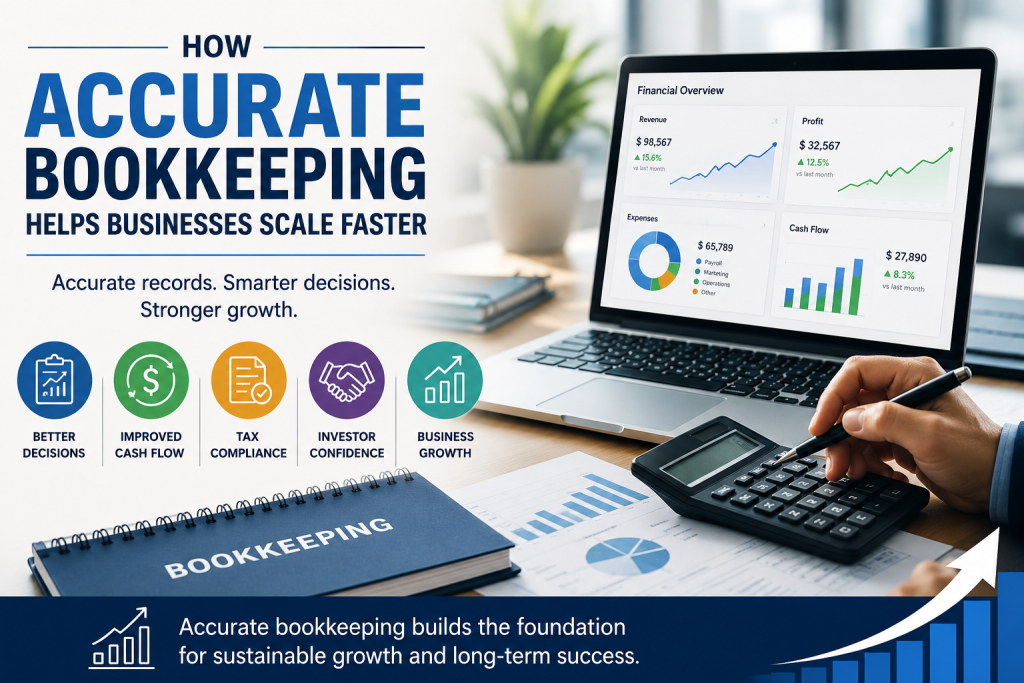
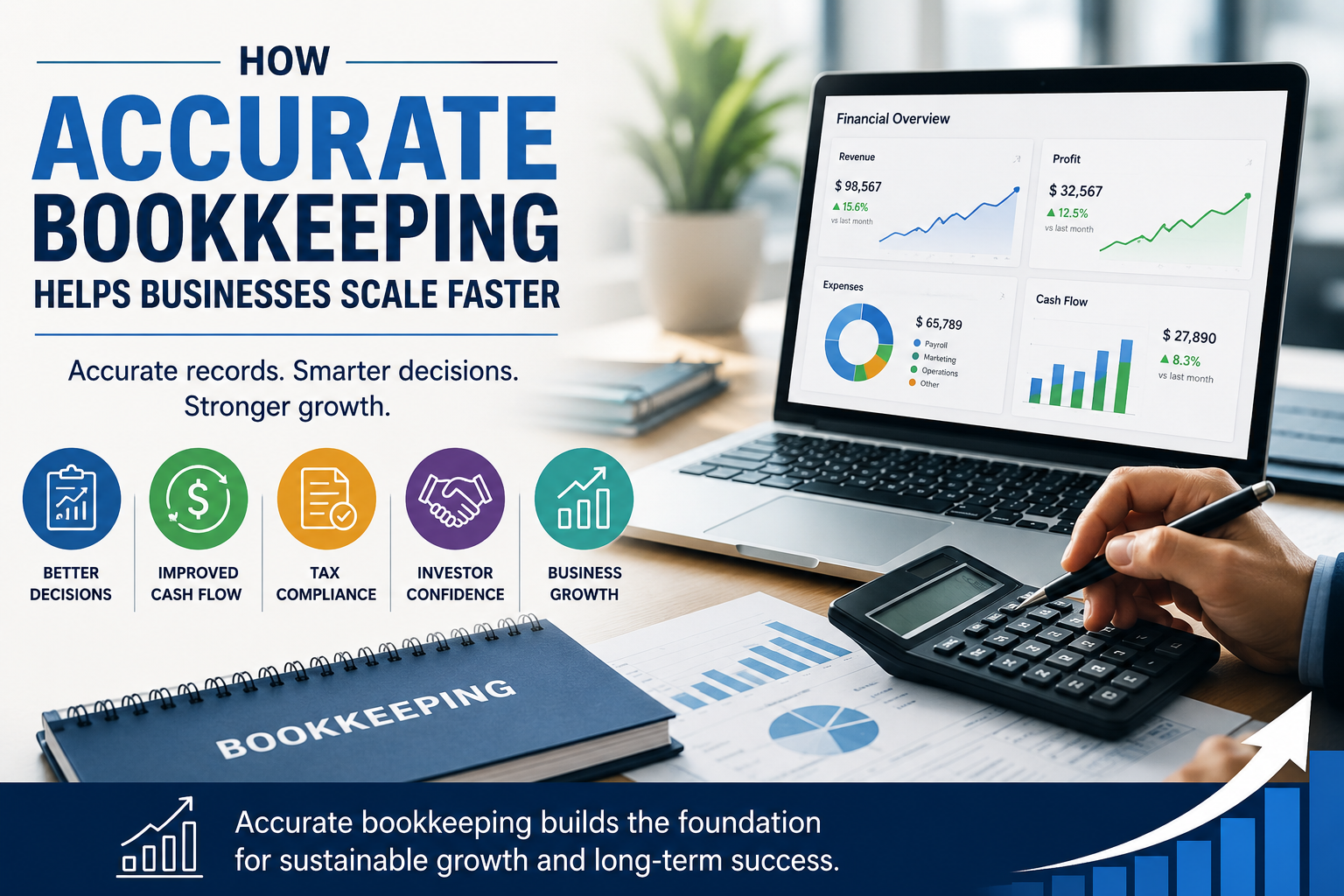
Every growing business reaches a point where managing finances becomes more complex than simply tracking income and expenses. As operations expand, financial clarity becomes one of the most important factors behind sustainable growth. Accurate bookkeeping plays a major role in helping businesses scale efficiently by providing reliable financial data, improving decision making, maintaining compliance, and supporting long term financial planning.
Businesses that maintain accurate books are better equipped to manage cash flow, identify profitable opportunities, reduce unnecessary expenses, and make confident strategic decisions. Whether it is a startup, a real estate company, a restaurant, or a growing law firm, proper bookkeeping creates a strong financial foundation that supports business expansion.
Scaling a business requires constant decision making. Business owners need to know when to hire employees, invest in marketing, purchase equipment, expand operations, or enter new markets. Without accurate financial records, these decisions are often based on assumptions instead of facts.
Proper bookkeeping provides real time insights into revenue, expenses, profits, and cash flow. When financial records are updated regularly and maintained accurately, business owners can clearly understand their financial position and make informed decisions with confidence. Reliable reports also help identify which services, products, or departments generate the highest profits, allowing businesses to focus on growth opportunities that deliver the best returns.
Cash flow is one of the biggest challenges faced by growing businesses. Many profitable companies still struggle financially because they fail to manage their cash flow effectively. Accurate bookkeeping helps businesses monitor incoming and outgoing cash consistently, ensuring there is enough liquidity to support daily operations and future expansion.
When businesses have a clear understanding of their cash flow, they can avoid delayed payments, reduce financial stress, and plan investments more efficiently. Proper bookkeeping also helps track unpaid invoices, recurring expenses, and upcoming financial obligations, preventing unexpected cash shortages that can slow down growth.
As businesses scale, tax responsibilities become more complicated. Inaccurate records can lead to missed deductions, filing errors, penalties, and compliance issues. Maintaining organized and accurate financial records simplifies tax preparation and ensures businesses remain compliant with financial regulations.
Professional bookkeeping helps categorize expenses correctly, maintain proper documentation, and prepare financial reports needed for tax filing. This reduces the risk of audits and allows businesses to focus on growth without worrying about financial compliance issues. Businesses with accurate records also benefit from identifying legitimate tax saving opportunities that improve overall profitability.
Businesses looking to scale often require external funding, loans, or investor support. Investors and financial institutions want to see clear and organized financial statements before making investment decisions. Accurate bookkeeping demonstrates professionalism, financial stability, and operational transparency.
Well maintained financial records provide lenders and investors with confidence in the business’s financial health. Detailed profit and loss statements, balance sheets, and cash flow reports help showcase business performance and growth potential. Companies with reliable bookkeeping are more likely to secure funding and attract long term investment opportunities.
When financial data is disorganized, business owners and employees spend unnecessary time correcting errors, searching for invoices, and resolving accounting issues. This reduces productivity and slows down operations.
Accurate bookkeeping streamlines financial processes and improves operational efficiency. Automated systems, organized records, and timely reporting allow businesses to focus more on serving clients and expanding operations instead of handling financial confusion. Efficient bookkeeping also improves collaboration between departments by providing consistent and reliable financial information across the organization.
Business growth requires strategic financial planning. Accurate bookkeeping provides historical financial data that helps businesses forecast future revenue, manage budgets, and prepare for expansion. Without proper financial records, creating realistic growth plans becomes difficult.
Reliable bookkeeping enables businesses to set achievable financial goals based on actual performance data. It also helps identify seasonal trends, spending patterns, and potential risks that may impact future operations. With proper planning supported by accurate records, businesses can scale more confidently and avoid costly financial mistakes.
Maintaining accurate financial records also strengthens relationships with clients and vendors. Businesses that manage invoices, payments, and contracts efficiently create a reputation for professionalism and reliability. Timely payments to suppliers and clear invoicing processes improve trust and support long term business partnerships.
Proper bookkeeping ensures that financial transactions are recorded correctly, reducing disputes and improving communication with stakeholders. Strong vendor and client relationships contribute to smoother operations and create opportunities for business expansion.
Modern bookkeeping solutions and cloud accounting software have transformed the way businesses manage their finances. Businesses can now access financial data in real time, automate repetitive tasks, and generate detailed reports instantly.
Technology combined with accurate bookkeeping improves efficiency, minimizes human errors, and provides valuable financial insights that support business growth. Businesses that leverage digital accounting tools can scale operations more effectively while maintaining financial accuracy and control.
Accurate bookkeeping is far more than an administrative task. It is a critical business function that directly impacts growth, profitability, and long term success. Businesses that maintain organized and reliable financial records are better prepared to manage cash flow, make informed decisions, maintain compliance, and secure investment opportunities.
As companies continue to grow in competitive markets, financial clarity becomes essential for sustainable expansion. Investing in professional bookkeeping services allows businesses to operate more efficiently, reduce financial risks, and focus on scaling with confidence. Accurate bookkeeping creates the financial stability and strategic insight needed for businesses to grow faster and achieve long term success.

Error: Contact form not found.

The great explorer of the truth, the master-builder of human happiness no one rejects dislikes avoids pleasure itself because it is pleasure but because know who do not those how to pursue pleasures rationally encounter consequences that are extremely painful desires to obtain.
Read More