Demos
 Colors
 Docs
 Support






Introduction
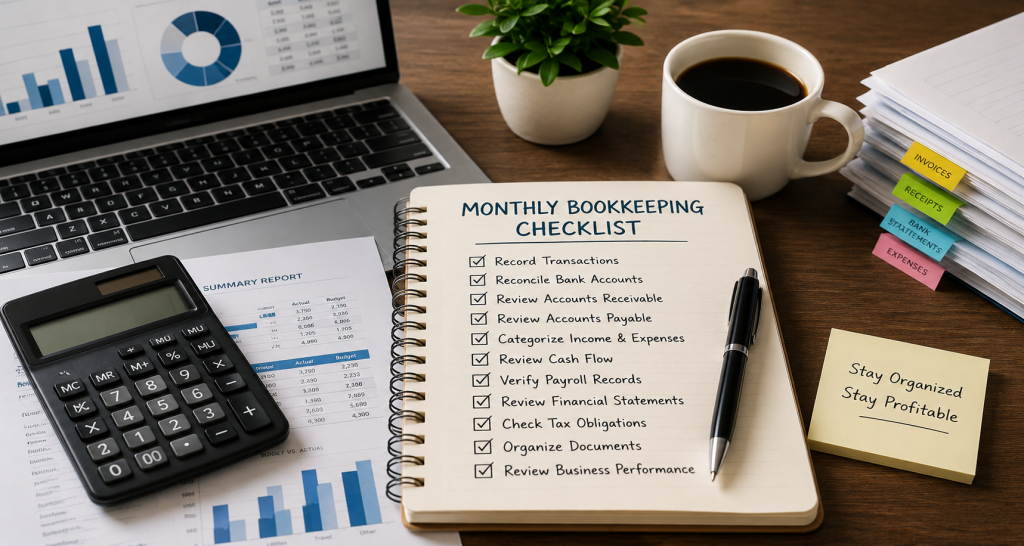
Running a small business involves managing multiple responsibilities, from serving customers and growing revenue to overseeing daily operations. Amid these priorities, bookkeeping is often pushed aside until tax season arrives. Unfortunately, neglecting financial records can lead to cash flow issues, missed deductions, inaccurate reports, and costly mistakes.
Maintaining your books every month is one of the simplest ways to keep your business financially healthy. A consistent bookkeeping routine provides accurate financial information, helps you make informed business decisions, and ensures you remain prepared for tax filing and compliance requirements.
Whether you manage your own books or work with a professional bookkeeping service, following a monthly bookkeeping checklist can help you stay organized and confident about your business finances.
Why Monthly Bookkeeping Matters
Bookkeeping is much more than recording income and expenses. It creates a clear financial picture of your business and allows you to understand where your money is coming from and where it is being spent.
Updating your financial records every month helps identify cash flow problems before they become serious. It also reduces errors, simplifies tax preparation, and provides accurate financial reports that support better business planning.
Businesses that maintain consistent bookkeeping are often better prepared to manage growth, secure funding, and respond to unexpected financial challenges.
Record Every Business Transaction
The foundation of good bookkeeping begins with recording every financial transaction accurately. Every sale, purchase, payment, refund, and expense should be entered into your accounting system.
Waiting until the end of the quarter or year to update transactions increases the likelihood of missing important information. Monthly recording ensures your financial data remains complete and up to date.
Using cloud-based accounting software can simplify this process and reduce the chances of manual errors.
Reconcile Your Bank Accounts
Bank reconciliation is one of the most important monthly bookkeeping tasks. It involves comparing your accounting records with your bank statements to ensure that every transaction matches correctly.
Reconciling accounts helps identify duplicate entries, missing transactions, unauthorized charges, or banking errors before they become larger problems.
Accurate reconciliation also ensures that your financial reports reflect your actual cash position.
Review Accounts Receivable
Outstanding customer invoices directly affect your cash flow. Every month, review unpaid invoices and follow up with customers whose payments are overdue.
Timely collections improve business liquidity and reduce the risk of bad debt. Monitoring accounts receivable also helps you understand customer payment patterns and identify potential collection issues early.
Healthy cash flow starts with effective invoice management.
Review Accounts Payable
Just as collecting payments is important, paying vendors on time is equally essential. Reviewing outstanding bills every month helps you avoid late payment penalties and maintain strong relationships with suppliers.
Keeping track of due dates also allows you to plan your cash flow more effectively and prioritize expenses based on available funds.
Consistent monitoring of accounts payable contributes to better financial stability.
Categorize Income and Expenses Correctly
Proper expense categorization is critical for accurate financial reporting and tax compliance. Every transaction should be assigned to the correct accounting category, whether it involves office expenses, payroll, travel, utilities, marketing, or equipment purchases.
Incorrect categorization can distort financial reports and result in inaccurate tax filings.
Taking the time to review expense classifications every month helps maintain organized records and simplifies year-end accounting.
Review Cash Flow
Cash flow is the lifeblood of every small business. Even profitable businesses can experience financial difficulties if cash is not managed effectively.
Each month, review how much money entered your business, how much was spent, and whether sufficient cash remains to cover future obligations.
Understanding your cash flow enables better budgeting, investment planning, and operational decision-making.
Verify Payroll Records
If your business has employees, payroll should be reviewed every month to ensure salaries, taxes, deductions, bonuses, and benefits have been recorded accurately.
Payroll errors can lead to compliance issues, employee dissatisfaction, and financial penalties.
Regular payroll reviews help ensure accuracy while reducing the risk of future corrections.
Review Financial Statements
Monthly financial statements provide valuable insight into your company’s performance.
The Profit and Loss Statement reveals whether your business generated a profit during the month. The Balance Sheet shows your assets, liabilities, and owner’s equity, while the Cash Flow Statement explains how money moved through the business.
Reviewing these reports regularly allows business owners to identify trends, measure profitability, and make informed financial decisions.
Check Tax Obligations
Taxes should never become a last-minute concern. Monthly bookkeeping provides an opportunity to review estimated tax liabilities, sales tax obligations, payroll taxes, and any other required filings.
Setting aside funds each month for future tax payments helps prevent financial stress when deadlines arrive.
Well-maintained books also make tax preparation significantly faster and more accurate.
Organize Financial Documents
Invoices, receipts, purchase orders, contracts, and bank statements should all be organized and securely stored each month.
Maintaining digital copies alongside physical records ensures that important documents remain accessible whenever needed for audits, tax preparation, or financial reviews.
An organized document management system saves time and reduces administrative headaches.
Review Business Performance
Bookkeeping is not only about compliance; it is also a valuable business management tool.
At the end of each month, compare your actual financial performance against your business goals. Analyze revenue growth, operating expenses, profitability, and overall financial health.
These insights help you identify opportunities for improvement and adjust your business strategy before small issues become larger challenges.
Consider Professional Bookkeeping Support
As your business grows, bookkeeping becomes increasingly complex. Managing daily operations while maintaining accurate financial records can consume valuable time that could be better spent serving customers and expanding your business.
Professional bookkeeping services ensure your records remain accurate, compliant, and up to date. Experienced bookkeepers also provide timely financial reports that support smarter business decisions and reduce stress during tax season.
Outsourcing bookkeeping allows business owners to focus on growth while knowing their finances are in capable hands.
Conclusion
Consistent monthly bookkeeping is one of the most valuable habits a small business owner can develop. Accurate financial records provide clarity, improve decision-making, simplify tax preparation, and strengthen the overall financial health of your business.
By reviewing transactions, reconciling accounts, monitoring cash flow, organizing financial documents, and evaluating financial performance every month, you create a solid foundation for long-term success.
Whether you manage bookkeeping internally or work with a trusted bookkeeping partner, maintaining a monthly bookkeeping routine will help your business remain organized, compliant, and prepared for future growth.
Post a comment
Related Posts

What Happens If You Ignore Your Business Finances?
Introduction Running a business involves countless responsibilities. From managing customers and employees to handling sales,…
Bookkeeping vs. Accounting: What’s the Difference?
Managing your business finances is one of the most important responsibilities of being a business…

Why Clean Books Matter During Tax Season
Introduction For many business owners, tax season is one of the most stressful times of…