Demos
 Colors
 Docs
 Support






Introduction
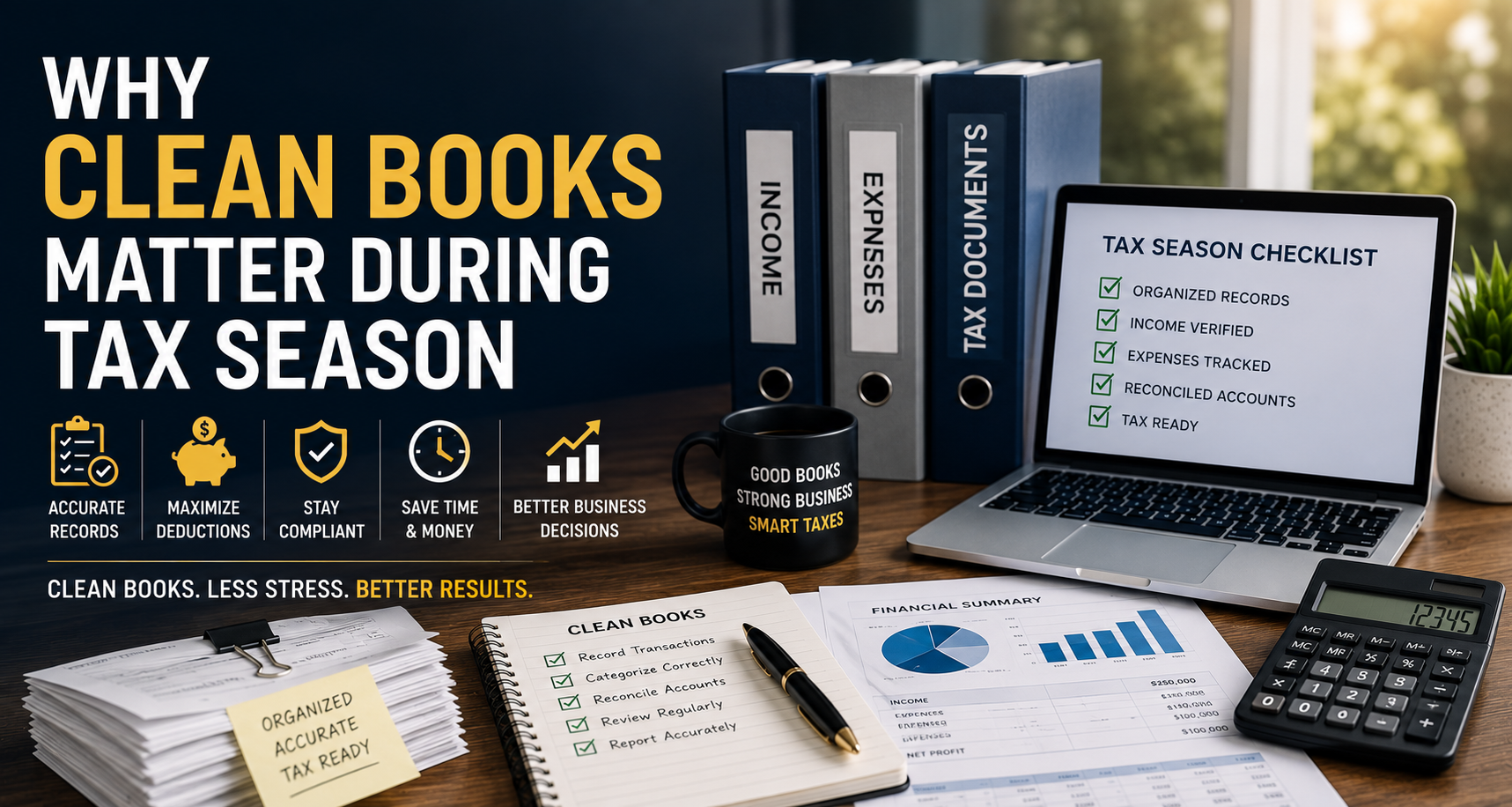
For many business owners, tax season is one of the most stressful times of the year. Gathering receipts, organizing invoices, reviewing expenses, calculating income, and preparing financial statements can quickly become overwhelming, especially if bookkeeping has been neglected throughout the year. What should be a straightforward process often turns into a race against deadlines, increasing the risk of errors, missed deductions, and unnecessary penalties.
The foundation of a smooth and successful tax filing process is clean and accurate bookkeeping. When your financial records are organized, up to date, and error-free, tax preparation becomes significantly easier. More importantly, clean books provide confidence that your tax return is accurate, compliant, and supported by reliable financial data.
Whether you run a startup, a growing small business, or an established company, maintaining clean books throughout the year is one of the smartest financial habits you can develop.
What Are Clean Books?
Clean books refer to financial records that are accurate, complete, properly categorized, and regularly updated. Every business transaction is recorded correctly, bank accounts are reconciled, invoices are organized, expenses are classified accurately, and financial statements reflect the true financial position of the business.
Clean books provide a reliable financial history that allows business owners, accountants, and tax professionals to work efficiently without spending valuable time correcting mistakes or searching for missing information.
Maintaining clean books is not just about staying organized. It is about ensuring the financial integrity of your business.
Tax Preparation Becomes Faster and Easier
One of the biggest advantages of maintaining clean books is the amount of time saved during tax season.
When financial records are updated consistently, accountants already have access to organized income statements, expense reports, bank reconciliations, payroll records, and supporting documentation. Instead of spending weeks sorting through receipts and correcting accounting errors, tax professionals can focus directly on preparing and filing accurate tax returns.
This streamlined process reduces stress and allows business owners to meet filing deadlines without unnecessary pressure.
Accurate Financial Records Reduce Errors
Mistakes in bookkeeping often lead to mistakes in tax filing.
Incorrect expense classifications, duplicate transactions, missing invoices, or inaccurate income records can result in incorrect tax calculations. These errors may cause businesses to overpay taxes or, even worse, underreport income, leading to penalties and compliance issues.
Clean books provide accurate financial data that supports precise tax calculations and minimizes the likelihood of costly mistakes.
Reliable bookkeeping helps ensure every figure reported on a tax return reflects the actual financial activity of the business.
Maximize Eligible Tax Deductions
Many businesses lose money every year because they fail to claim legitimate business deductions.
Accurate bookkeeping makes it easier to identify deductible expenses such as office supplies, travel, professional services, software subscriptions, marketing costs, utilities, insurance, payroll expenses, and business equipment purchases.
When expenses are properly categorized and supported by documentation, accountants can confidently claim every eligible deduction permitted under tax regulations.
Maintaining clean books helps businesses reduce taxable income while remaining fully compliant.
Stay Compliant with Tax Regulations
Tax authorities require businesses to maintain accurate financial records that support the information reported on tax returns.
Organized bookkeeping demonstrates that the business follows proper accounting practices and maintains transparency in its financial reporting.
Compliance becomes much easier when income, expenses, payroll, sales tax, and other financial records are consistently maintained throughout the year rather than reconstructed at the last minute.
Good bookkeeping reduces compliance risks and helps businesses avoid unnecessary complications.
Improve Cash Flow Visibility
Tax planning is closely connected to cash flow management.
Clean books provide business owners with a clear understanding of available cash, outstanding receivables, upcoming liabilities, and expected tax obligations.
Knowing your financial position before tax deadlines allows you to plan payments more effectively and avoid unexpected financial strain.
Businesses with accurate bookkeeping are better prepared to manage both daily operations and future tax responsibilities.
Reduce the Risk of Audits
Although no business can completely eliminate the possibility of an audit, maintaining clean books significantly reduces the likelihood of attracting unwanted attention due to inconsistent financial reporting.
Accurate records, properly documented expenses, reconciled bank accounts, and organized financial statements demonstrate professionalism and financial discipline.
If an audit does occur, businesses with clean books can respond quickly by providing the required documentation without unnecessary delays or confusion.
Well-maintained records make the entire audit process far less stressful.
Make Better Business Decisions
Clean books provide more than tax benefits. They offer valuable financial insights that support smarter business decisions throughout the year.
Accurate financial reports allow business owners to evaluate profitability, monitor operating expenses, measure cash flow, identify growth opportunities, and control unnecessary spending.
When financial information is reliable, decision-making becomes more confident and strategic.
Good bookkeeping transforms financial records into a powerful business management tool.
Save Time and Lower Accounting Costs
When bookkeeping is incomplete or disorganized, accountants spend additional time correcting errors, locating missing transactions, reconciling accounts, and reorganizing financial records before they can begin preparing tax returns.
This additional work often results in higher accounting fees.
Maintaining clean books throughout the year minimizes corrective work and allows accounting professionals to complete tax preparation more efficiently.
The result is lower professional fees and faster service.
Build Investor and Lender Confidence
Banks, investors, and financial institutions frequently request financial statements when evaluating loan applications or investment opportunities.
Clean books provide accurate Profit and Loss Statements, Balance Sheets, and Cash Flow Statements that demonstrate financial stability and responsible business management.
Reliable financial records increase credibility and improve the chances of securing financing when needed.
Strong bookkeeping supports both tax compliance and future business growth.
Why Professional Bookkeeping Makes a Difference
Maintaining clean books requires consistency, attention to detail, and accounting expertise.
Professional bookkeeping services ensure that financial transactions are recorded accurately, accounts are reconciled regularly, expenses are categorized correctly, and financial reports remain up to date throughout the year.
Rather than waiting until tax season to organize financial records, professional bookkeepers maintain accurate books every month, making year-end tax preparation significantly easier.
Outsourcing bookkeeping also allows business owners to focus on serving customers and growing their businesses while experienced professionals manage financial accuracy behind the scenes.
Conclusion
Clean books are one of the most valuable assets a business can have during tax season. Organized financial records simplify tax preparation, reduce errors, maximize eligible deductions, strengthen compliance, improve financial decision-making, and provide confidence that every tax return is accurate and complete.
Instead of treating bookkeeping as a once-a-year task, businesses should view it as an ongoing process that supports financial stability throughout the year.
By maintaining clean books and partnering with experienced bookkeeping professionals, business owners can approach tax season with less stress, greater accuracy, and the confidence that their finances are always in order.
Post a comment
Related Posts

What Happens If You Ignore Your Business Finances?
Introduction Running a business involves countless responsibilities. From managing customers and employees to handling sales,…
Bookkeeping vs. Accounting: What’s the Difference?
Managing your business finances is one of the most important responsibilities of being a business…
Bookkeeping Tips for Law Firms
Introduction Running a successful law firm requires more than delivering exceptional legal services. Behind every…